A guitar that isn't tuned properly will never sound good—no matter how well you play. Learning how to tune your guitar is one of the first and most important skills every beginner should master.
In this guide, you'll learn the standard guitar tuning, different tuning methods, common beginner mistakes, and tips to keep your guitar sounding its best.
Why Is Guitar Tuning Important?
When your guitar is in tune:
-
Chords sound clean and pleasant.
-
Songs sound the way they're meant to.
-
Ear training improves naturally.
-
Playing becomes more enjoyable.
-
Practice sessions are more productive.
Even a high-end guitar will sound poor if it's out of tune.
Standard Guitar Tuning (E A D G B E)
A standard six-string guitar is tuned from the thickest string (6th) to the thinnest string (1st) as follows:
| String | Note |
|---|---|
| 6th | E |
| 5th | A |
| 4th | D |
| 3rd | G |
| 2nd | B |
| 1st | E |
A simple way to remember it is:
E – A – D – G – B – E
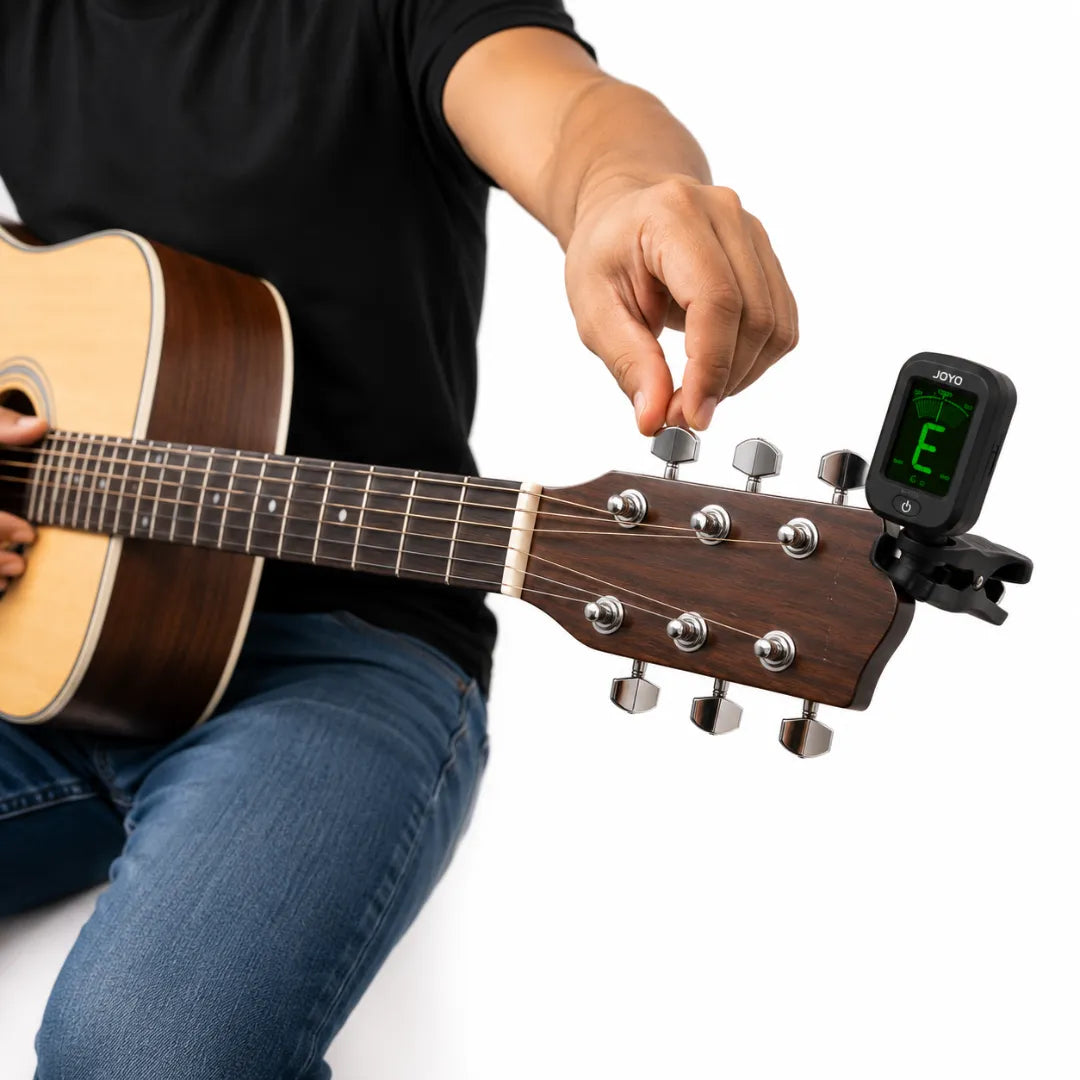
Method 1: Use a Clip-On Guitar Tuner (Best for Beginners)
A clip-on tuner is the easiest and most accurate way to tune a guitar.
Steps
-
Clip the tuner onto the headstock.
-
Turn it on.
-
Pluck one string at a time.
-
The tuner will display the note.
-
Tighten or loosen the tuning peg until the correct note appears.
-
Repeat for all six strings.
Most clip-on tuners also indicate whether you're sharp (too high) or flat (too low).
Method 2: Tune Using a Mobile App
Many free tuning apps use your phone's microphone.
Advantages
-
Free
-
Easy to use
-
Great for beginners
-
No extra equipment required
For the best accuracy, tune your guitar in a quiet environment.
Method 3: Tune by Ear
Experienced players can tune by comparing notes between strings.
This method helps develop musical hearing, but beginners should first become familiar with a tuner before relying on their ears.
How Often Should You Tune Your Guitar?
It's normal for guitars to go slightly out of tune.
You should tune your guitar:
-
Before every practice session
-
Before performances
-
After changing strings
-
After long travel
-
When weather or humidity changes significantly
Checking the tuning only takes a minute and makes a big difference.
Why Does a Guitar Go Out of Tune?
Common reasons include:
-
New strings stretching
-
Temperature changes
-
Humidity changes
-
Frequent playing
-
Improper string installation
-
Sudden impacts or knocks
-
Worn tuning machines
New strings usually require several tuning adjustments before they become stable.
Beginner Tuning Tips
-
Tune slowly.
-
Always tune to the correct note.
-
If you go too high, loosen slightly and tune back up.
-
Avoid turning tuning pegs too quickly.
-
Replace old strings regularly.
-
Store your guitar safely when not in use.
Common Tuning Mistakes
Avoid these beginner errors:
❌ Tuning the wrong string
❌ Tightening too fast
❌ Ignoring flat or sharp indicators
❌ Using worn-out strings
❌ Not checking tuning before playing
Essential Accessories for Better Tuning
These accessories make tuning easier and help keep your guitar in top condition:
-
Clip-on Guitar Tuner
-
Extra Guitar Strings
-
String Winder
-
Capo
-
Guitar Stand
-
Gig Bag
-
Microfiber Cleaning Cloth
Frequently Asked Questions
Should I tune my guitar every day?
Yes. It's a good habit to check the tuning before every practice session.
Can guitar strings break while tuning?
Yes, but it's uncommon. Strings usually break if they're old, damaged, or tightened far beyond the correct pitch.
Why won't my guitar stay in tune?
Possible causes include new strings, improper string winding, worn tuning machines, or environmental changes.
Which tuning should beginners use?
Standard tuning (E A D G B E) is recommended because most beginner lessons, songs, and chord charts use it.
Do expensive guitars stay in tune longer?
Higher-quality guitars often have better tuning stability, but every guitar needs regular tuning.
Final Thoughts
Keeping your guitar in tune is one of the simplest ways to improve your sound. Whether you use a clip-on tuner, a mobile app, or eventually tune by ear, making tuning part of your routine will help you enjoy playing more and progress faster.
With just a minute of tuning before each session, your chords will sound clearer, your practice will be more rewarding, and your confidence as a guitarist will continue to grow.
Need a Reliable Guitar Tuner?
Browse our collection of clip-on tuners, guitar strings, capos, and beginner accessories to keep your instrument sounding its best. If you're unsure which tuner is right for your guitar, our team is happy to help you choose the perfect one.
Share:
How to Buy Your Perfect First Guitar